The Manifesto

A calm sky above the noise.

The world is louder than ever. But truth does not live in the noise — it lives in what we choose to preserve, and how faithfully we keep it.

Manifesto v2 · Trust with Memory · July 2026
The missing layer

The world does not suffer from a shortage of information. It suffers from a shortage of trustworthy memory.

We built systems capable of producing information faster than society can understand it. We built networks that distribute claims without preserving their origins. We built platforms that reward attention without consistently distinguishing reliability.

Now we are building artificial intelligence capable of generating convincing answers, images, analysis, and explanations at extraordinary speed. But the systems that preserve provenance, context, uncertainty, and change have not advanced at the same pace.

Claims travel without their evidence. Corrections become separated from the statements they correct. Institutions revise their positions without preserving the path between what they said then and what they say now. Communities inherit different versions of reality.

The crisis is not only misinformation. It is the disappearance of the memory required to examine information responsibly.

Trust cannot be separated from memory

Trust is often described as belief. We see it differently. Trust is the ability to examine why something deserves confidence. A trustworthy conclusion depends on the record beneath it — its source, evidence, context, change, relationships, and uncertainty.

Without that memory, a statement may still persuade. An institution may still speak with authority. An algorithm may still produce an answer. But the path that allows others to inspect, question, correct, and learn has been lost.

Memory is the infrastructure beneath trust.

A claim should have a life

Most information systems treat claims as temporary statements. A claim appears, spreads, is repeated, challenged, revised, or forgotten. Then a newer statement replaces it, and the history becomes difficult to reconstruct.

A claim should not lose its life when it enters the world.

It should remain connected to the sources that support it. It should show when it has been corrected, disputed, or superseded. It should preserve the path from what was understood then to what is understood now.

The danger is not change. The danger is change without memory. A correction should not destroy the past — it should explain the path from the past to the present.

Knowledge lives between the claims

No single claim explains an entire system. Housing connects to transportation. Transportation connects to employment. Employment connects to health. Knowledge often emerges not only from individual claims, but from the relationships between them.

But a visible connection is not proof. A line between two claims is not enough — we must also know what that line means. Does one claim support another? Contradict it? Depend upon it? Revise it? Share a source?

AI can connect almost anything. The challenge is knowing whether the connection deserves to be trusted.

Modern systems often treat contradiction as noise. Caelum treats it as a place for inquiry. A contradiction does not tell us which claim is true — but it can reveal where deeper examination is needed. Sometimes a contradiction is not noise in the system. It is the system telling us where to look.

Memory makes evolution possible

Preserving memory does not mean freezing the past, or punishing institutions forever for what they once believed. Human beings learn. Science advances. Institutions revise. A system built for trustworthy memory must allow claims to evolve — but evolution should leave a trace.

Memory is not the opposite of evolution. Memory makes responsible evolution possible.

Institutions are among civilization's most important memory systems. Yet institutional memory is often scattered across reports, departments, and individual people. An institution that cannot reconstruct its own reasoning cannot fully learn from it. The institutions that remember will be the institutions we trust.

Artificial intelligence can summarize, generate, compare, and connect at extraordinary speed. But speed is not memory. Fluency is not provenance. Confidence is not evidence. AI-generated inferences must remain identifiable as inferences. They must not silently become facts. Caelum does not seek to replace human judgment with machine judgment — it seeks to give humans and machines a more trustworthy record from which to reason.

Caelum does not declare truth by authority

Caelum is not a ministry of truth. It is not a universal fact-checker. It is not a system designed to eliminate disagreement. Truth does not become trustworthy merely because it is centralized. Authorities can be wrong. Institutions can fail. Communities can hold knowledge that formal systems overlook.

Caelum does not begin with the question of who should decide what everyone must believe. It begins with another:

What must be preserved so that claims can be examined responsibly over time?

The answer includes evidence, provenance, context, uncertainty, relationships, challenge, and change history. Caelum does not promise certainty. It preserves the conditions for accountable inquiry.

Plurality without structure becomes confusion. Structure without plurality becomes control. A trustworthy system must make room for competing claims — but visibility does not mean equality. Caelum preserves those differences without flattening unequal evidence into artificial balance.

Not all knowledge begins in a report

Some knowledge is carried through people, place, language, genealogy, ceremony, practice, and responsibility across generations. Indigenous and place-based knowledge may preserve observations, relationships, and historical continuity that formal institutions have overlooked or failed to record.

Caelum must respect institutional evidence without assuming that institutions hold every legitimate form of knowledge. This does not mean every form of knowledge should be treated identically — it means its origin, method, context, stewardship, and limitations should remain visible.

Trustworthy memory must preserve both the record and the responsibilities through which that record is carried.

No system can fully replace the judgment of people who live with the consequences of decisions. A graph cannot decide what justice requires. A model cannot determine what a community should value. Technology can preserve context, surface relationships, and help us ask better questions — but responsibility remains human.

Sky · Vale · Land

Three layers of clarity

Caelum is not one product. It is a living system — three layers that together form a foundation that evolves with the people who use it.

Sky

Caelum Labs

Intelligence

The calm intelligence above the noise. Systems that seek signal, not sensation — truth that is earned, not manipulated.

Vale

Caelum Vale

Culture

The place where people belong, evolve, and learn. Identity without pressure. Community without chaos. Meaning without distortion.

Land

CaelumOS

Governance

The structural foundation: identity, provenance, contracts, rights — all sovereign, all transparent, all yours.

Evolution is our north star

"Systems evolve in stages — and when a system reaches its breaking point, it does not collapse… it transforms."— Doc Huston

Humanity is reaching that point. Caelum exists to guide individuals, cultures, and societies through the break — into a world defined not by chaos, but by coherence.

We believe in adaptive truth, intelligent evolution, calm architecture, and systems that grow with the people who use them. A calm mind sees further. A calm system endures longer. A calm sky reveals the truth.

The Stewards

Building trust infrastructure

Caelum is shepherded by those who believe that transparent, accountable systems are foundational infrastructure for modern civilization.
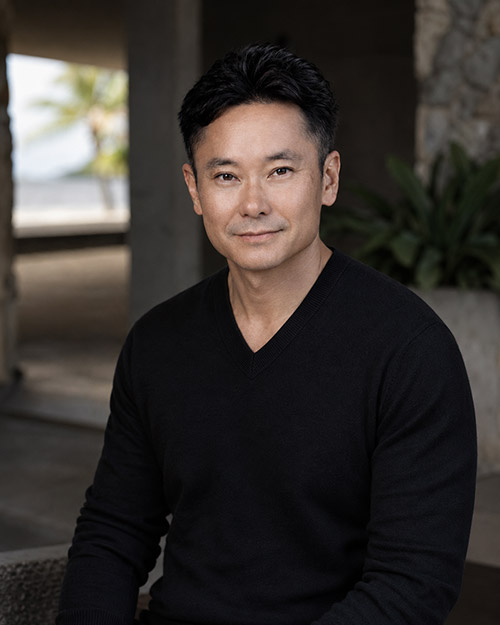
Taichi Yasuhara Founder

Taichi Yasuhara

Founder · Caelum Vale

Taichi Yasuhara is the founder of Caelum Vale, a long-term project focused on rebuilding trust in the digital age. His work is rooted in a simple but growing problem: humanity now produces information faster than it can verify, contextualize, or remember it.

His interest in trust began through years of observing how people, institutions, markets, and governments make decisions. Early in his career, he worked in a back-office role at the Hawaiʻi Legislature, where he saw how public ideas move through records, testimony, amendments, votes, and institutional memory before becoming law — or disappearing into the archive. That experience shaped his belief that many modern systems do not fail because people lack intelligence. They fail because shared reality has become harder to preserve.

Rather than acting as an arbiter of truth, Caelum explores systems where important claims are connected to evidence, timestamps, source provenance, context, and historical change — creating more transparent and auditable foundations for decision-making in business, government, media, and AI. As AI accelerates the production of information, he believes trust can no longer depend only on reputation, speed, or confidence. It will require memory.
Focus areas
Trust Infrastructure Information Systems AI Accountability Provenance
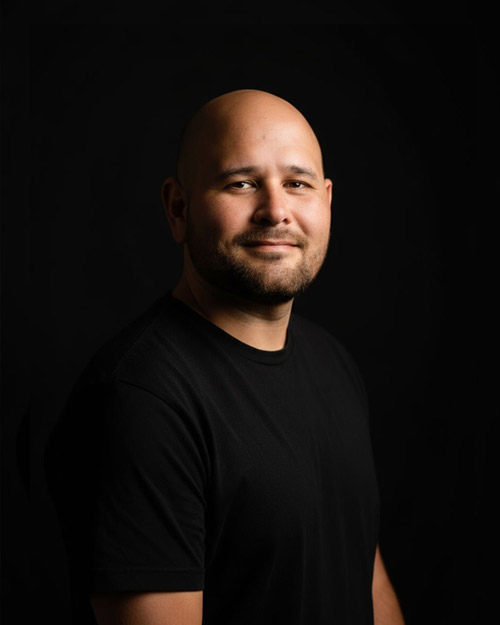
John Kealoha Garcia Founding Steward

John Kealoha Garcia

Founding Steward · Caelum Vale

John Kealoha Garcia is a Native Hawaiian strategist, creative director, and systems architect working at the intersection of trust infrastructure, Indigenous governance, media, and emerging technology. As a Founding Steward of Caelum Vale, he is helping shape a new framework for how truth, memory, provenance, and accountability are preserved in the digital age.

Rooted in an Indigenous worldview and informed by more than two decades of work across media, design, civic technology, and international relations, his work focuses on restoring integrity to information systems while empowering communities to steward their own narratives, knowledge, and digital futures.

Beyond Caelum Vale, he serves in leadership for the Nation of Hawaiʻi, working on digital sovereignty, international relations, and next-generation governance. Known for bridging ancient wisdom with modern systems design, he approaches technology not simply as software, but as social architecture — tools that should strengthen relationships, protect collective memory, and support human dignity.

Focus areas
Indigenous Governance Digital Sovereignty Systems Architecture Cultural Preservation Trust Infrastructure
The sky is open

Join the inner circle

For those ready to help build the future of trust infrastructure. Early stage and selective — we read every message.

Request access
A new truth for a new world. A system designed to evolve.